What Is a Backflow Valve and Why Your Home May Need One
What Is a Backflow Valve?
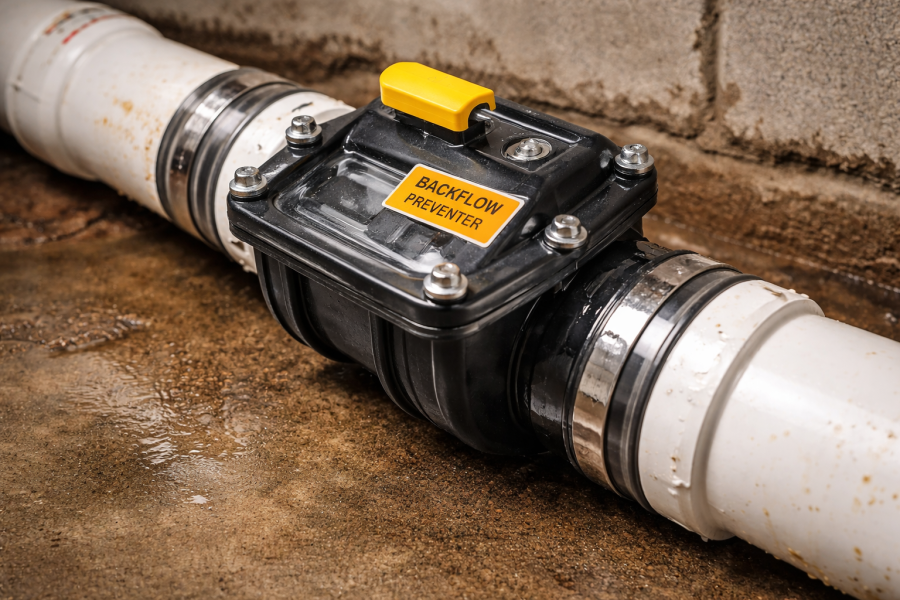
A backflow valve is a plumbing device designed to prevent wastewater from flowing backward into your home. Under normal conditions, sewage and wastewater move in one direction through your home’s plumbing system and into the municipal sewer line. However, during certain situations such as heavy rain or sewer system overload, water can reverse direction and flow back toward your home.
A backflow valve acts as a protective barrier. When wastewater attempts to flow backward, the valve automatically closes to stop contaminated water from entering your pipes and fixtures.
Why Backflow Can Be a Serious Problem
Sewer backflow is more than just an inconvenience. It can cause serious damage to your home and pose health risks. When wastewater backs up through floor drains, toilets, or basement plumbing fixtures, it can bring bacteria, debris, and contaminated water into living spaces.
The cleanup process can be expensive and time consuming, especially if the water damages flooring, walls, or personal belongings. Installing a backflow valve can significantly reduce the risk of this type of plumbing disaster.
If you are concerned about sewer backups, the team at Putman & Sons Plumbing can help evaluate your home’s plumbing system and determine whether a backflow prevention system is recommended.
When Homes Are Most at Risk
Certain homes are more vulnerable to backflow problems than others. Houses with basements, older sewer connections, or plumbing fixtures located below street level often face a higher risk.
Backflow can also occur during:
- Heavy rainstorms
- Rapid snowmelt
- Municipal sewer system overload
- Blocked sewer lines
When these conditions occur, pressure in the sewer line can push wastewater backward through connected pipes.
How Backflow Valves Work
A backflow valve contains a mechanical flap or gate that allows water to flow out of your home but prevents it from coming back in. Under normal operation, the valve remains open as wastewater flows toward the sewer system.
If backflow begins, the valve automatically closes, creating a barrier that stops reverse flow. Once the pressure in the sewer line returns to normal, the valve opens again so wastewater can continue draining properly.
Benefits of Installing a Backflow Valve
Installing a backflow valve provides several advantages for homeowners.
Key benefits include:
- Protection from sewer backups
- Reduced risk of water damage
- Improved plumbing system safety
- Greater peace of mind during storms
For homes in areas with heavy rainfall or aging infrastructure, backflow prevention can be an important safeguard.
When to Consider Installing One
You may want to consider installing a backflow valve if your home has experienced sewer backups in the past or if your plumbing fixtures are located in a basement.
A professional inspection can determine whether your plumbing system is at risk. Scheduling a consultation with Putman & Sons Plumbing allows experts to review your system and recommend the best prevention options.
Protecting Your Plumbing System
Backflow valves are a simple but highly effective way to protect your home from one of the most unpleasant plumbing problems. By preventing contaminated water from reentering your home, they help safeguard both your property and your health.